Greenwich removals packing and protection methods from experts
If you are planning a move in Greenwich, the packing stage can make or break the day. Boxes that are taped badly, furniture left unwrapped, and loose valuables rattling around in the van tend to cause the same problems every time: damage, stress, and a lot of regret later. Greenwich removals packing and protection methods from experts are designed to stop that spiral before it starts.
This guide breaks down how professional packing and protection actually work, why they matter in a busy part of London, and what you can do to get a smoother move. Whether you are moving from a top-floor flat near the Cutty Sark or a family home a little further out, the principles are the same: protect the item, protect the route, and protect your peace of mind.
Let's face it, moving day already has enough going on. You do not need a cracked mirror or a scratched table adding to the chaos.
Table of Contents
- Why expert packing and protection matters
- How expert removals packing and protection works
- Key benefits and practical advantages
- Who this is for and when it makes sense
- Step-by-step guidance
- Expert tips for better results
- Common mistakes to avoid
- Tools, resources and recommendations
- Law, compliance, standards, or best practice
- Options, methods, or comparison table
- Case study or real-world example
- Practical checklist
- Conclusion
- Frequently Asked Questions
Why Greenwich removals packing and protection methods from experts Matters
Packing is not just about getting things into boxes. Good packing is a system. It keeps weight balanced, prevents movement, absorbs shock, and helps removers load the vehicle in a controlled way. In Greenwich, that matters more than people often expect. Streets can be tight, access can be awkward, lifts may be small, and parking can be a proper nuisance at the wrong time of day. A well-packed move simply copes better with those realities.
Experts think about the journey, not just the item. A dining chair might look fine in the hallway, but if its legs knock against other items during a sudden brake or a sharp corner, damage happens fast. The same goes for glass, artwork, electronics, mirrors, and heavy furniture with delicate finishes.
There is also a reassuring side to this. Good protection reduces the number of decisions you need to make on moving day. Fewer surprises. Fewer "we'll just see how it goes" moments. To be fair, that calm matters almost as much as the physical protection itself.
Another reason it matters is timing. If your packing is rushed, the move often starts late. Then the whole day feels squeezed. Proper preparation keeps the flow steady, which is exactly what you want when a removal team is carrying furniture through stairwells, front steps, and shared entrances.
How Greenwich removals packing and protection methods from experts Works
Professional packing and protection usually follow a simple logic: assess, prepare, wrap, cushion, label, and load. The order matters. A rushed packer may wrap items quickly, but an expert thinks about the shape, fragility, weight, and destination of each piece before anything gets sealed.
1. Assessment comes first
Before a single box is filled, a proper move starts with assessment. That means identifying fragile items, bulky furniture, valuable pieces, and anything awkward to carry. A piano, a large television, and a box of kitchenware all need different handling. Even a stack of books can become a problem if the box is too large or too heavy. Yes, books are innocent. The box is not.
2. Materials are chosen to suit the item
There is no one-size-fits-all wrapping method. Fragile glassware may need packing paper, dividers, and a sturdy carton. Upholstered furniture may need clean protective covers to keep dust and scuffs away. Tables and sideboards may benefit from corner protectors and blankets. The job is to match the material to the risk.
3. Protection is layered
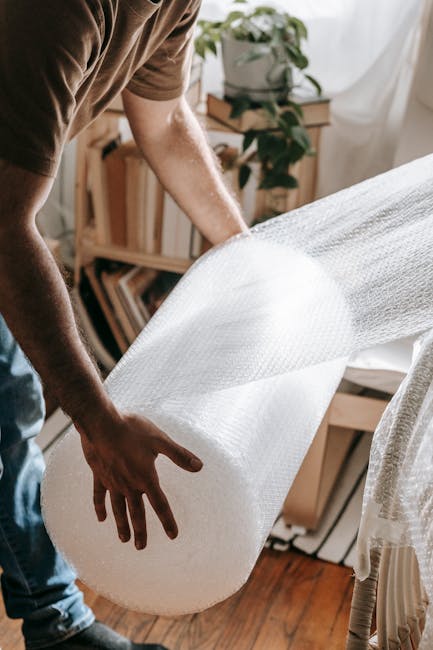
Experts tend to build protection in layers. For example, a mirror may be wrapped in paper first, then bubble wrap, then a cardboard sleeve, and finally secured upright in the van. That sounds like a lot, but it is exactly how you stop movement and impact from turning into damage.
4. Loading is part of the protection plan
Packing and loading go hand in hand. A perfectly wrapped item can still be damaged if it is loaded badly. Professional removers usually load heavier items low and stable, then build around them with softer goods and protective padding. They also leave sensible access points so nothing needs to be dragged out halfway through the trip.
That is the real difference with expert methods: they do not treat packing as a standalone chore. It is part of a full removal strategy.
Key Benefits and Practical Advantages
People often think the main benefit is avoiding breakage. That is true, of course, but it is not the whole story. Better packing and protection also affects speed, stress, and the overall cost-effectiveness of the move.
- Less damage risk: Items are less likely to chip, crack, bend, or scratch during lifting and transport.
- Faster loading and unloading: Clearly packed and labelled boxes are easier to place in the right room.
- Better use of space: Well-packed boxes and protected furniture fit more efficiently into the van.
- Lower chance of confusion: Fragile, heavy, and essential items are easier to identify.
- Less lifting strain: Stable packing reduces awkward handling and the chance of a box splitting open.
- Cleaner arrival: Furniture wrapped properly is less likely to pick up dirt, dust, or rain on the way.
One small but meaningful advantage is confidence. When the boxes feel solid and the furniture is wrapped correctly, everyone tends to move with more certainty. That makes the day feel less like a scramble and more like a controlled handover.
Expert summary: The best packing and protection methods are not just about wrapping items well; they are about creating a safe, stable route from one property to the next, with as little movement and friction as possible.
Who This Is For and When It Makes Sense
Not every move needs the same level of protection, but most domestic and small business moves benefit from professional methods. If you are deciding whether to do it all yourself or bring in help, think about the items, the access, and the pressure on your time.
It makes particular sense if you are moving:
- from or into a flat with stairs or limited lift access
- with fragile or sentimental items you cannot easily replace
- with large furniture, fitted pieces, or awkwardly shaped belongings
- with limited time to pack properly before the move
- with children, pets, or a lot of daily life still happening around the house
- after a sale or rental change where timings are tight and stressful
In Greenwich, that can include period properties, modern apartment buildings, shared entrances, or homes where parking is a bit of a puzzle. The more complex the access, the more value there is in proper packing and protection. Truth be told, that is where DIY moves often get messy.
If you are only moving a few lightweight items, you may not need a full professional pack. But even then, the same principles apply: stable boxes, proper padding, and sensible labelling. The difference between a tidy move and a frustrating one is often quite small.
Step-by-Step Guidance
If you want to understand the expert approach, it helps to see the process in order. Here is a practical version you can follow at home, even if you are not using a full packing service.
Step 1: Sort by fragility and priority
Group your belongings into categories: fragile, heavy, essential, valuable, and non-essential. Keep the items you will need first on top of the pack list so you do not spend the first night in the new place hunting for a kettle, phone charger, or toilet roll. A tiny detail, but a memorable one.
Step 2: Choose the right box for the job
Small boxes are best for heavy items like books, tools, or kitchen jars. Larger boxes are suitable for lighter but bulkier belongings such as bedding or cushions. Overfilling a large box is one of the quickest ways to create a lifting problem.
Step 3: Wrap delicate items individually
Use packing paper or soft wrapping around each fragile item. Plates should be packed on edge rather than flat where possible. Glasses need separation. Picture frames should be padded at the corners. If you hear items clinking together in a box, that is your cue to repack it.
Step 4: Fill empty spaces
Any gap inside a box becomes a movement zone. Use crumpled paper, soft cloths, or other suitable cushioning to stop things shifting in transit. It is a small thing, but it makes a huge difference when the van takes a turn or the box is set down harder than expected.
Step 5: Seal and label clearly
Write the room and contents on the box, and mark fragile items plainly. Label at least two sides so the information stays visible when boxes are stacked. Some people leave this until the end and then regret it immediately.
Step 6: Protect furniture before moving it
Use furniture blankets, padded covers, corner guards, or shrink wrap where suitable. Remove detachable parts, secure doors and drawers, and tape loose cables neatly. That is especially useful for wardrobes, desks, and media units, which can behave a bit unpredictably when moved.
Step 7: Load in a stable order
Heavy items go in first, upright and secure. Softer items can be used as buffers. Fragile goods should not be buried where they can be crushed. The goal is to reduce movement as much as possible without making unloading impossible.
Step 8: Check rooms and access points
Before the team leaves, check that nothing has been missed behind sofas, in cupboards, on windowsills, or in the loft. It happens more often than people think. One last walk-through can save a lot of bother later.
Expert Tips for Better Results
There are a few habits that separate a decent packing job from a genuinely good one. None of them are flashy, but they work.
- Use less space in each box than you think: A box that looks full is not always a box that is safe to carry.
- Double-tape the base of heavier boxes: The bottom is where failure usually starts.
- Keep valuables separate: Passports, jewellery, keys, small electronics, and important documents should travel with you.
- Protect corners first: Corners are where damage often begins, especially on furniture and frames.
- Use clean materials: Dust and damp can leave marks on light-coloured upholstery or polished surfaces.
- Plan for weather: A wet London morning can turn a smooth move into a slippery one. Waterproof covers and quick loading matter more than people realise.
One practical tip we often suggest: pack an "open first" box with basics like mugs, chargers, snacks, a cloth, toiletries, and basic tools. It sounds simple. It is simple. And it saves a surprising amount of low-level stress at the end of a long day.
Also, if you are wrapping artwork or a TV, measure the item before you start. Guessing usually leads to either wasted material or a cover that is too tight. Nobody needs a battle with cling film at 8pm.
Common Mistakes to Avoid
The same mistakes show up again and again. The good news is they are easy to spot once you know what to look for.
- Overpacking boxes: Heavy boxes split, strain backs, and are harder to stack safely.
- Under-padding fragile items: A few sheets of paper is rarely enough for glass or ceramics.
- Leaving furniture exposed: Bare wood and painted finishes can scuff quickly against door frames and van walls.
- Mixing too many item types: Mixing heavy and delicate items in one box usually creates pressure points.
- Skipping labels: Unlabelled boxes slow everything down and create confusion at the destination.
- Forgetting access constraints: Narrow stairwells and small lifts need extra planning, not less.
The most common issue, honestly, is rushing. People know what they should do, then time slips away and shortcuts creep in. One box here, one piece of furniture there. Then the move is suddenly "good enough," which is usually where damage sneaks in.
If in doubt, slow down at the packing stage. It pays off.
Tools, Resources and Recommendations
You do not need a warehouse of specialist equipment, but the right tools make a move far easier. A sensible packing kit usually includes sturdy boxes, packing tape, packing paper, bubble wrap, furniture blankets, mattress covers, marker pens, stretch wrap, and scissors or a tape gun.
| Item | Best use | Why it helps |
|---|---|---|
| Small boxes | Books, crockery, tools | Safer to lift and less likely to become too heavy |
| Medium boxes | Kitchen items, mixed household goods | Flexible for everyday packing |
| Furniture blankets | Tables, wardrobes, drawers, desks | Reduces scuffs and surface marks |
| Packing paper | Glass, ceramics, ornaments | Wraps items without adding too much bulk |
| Stretch wrap | Securing loose parts and soft furnishings | Keeps drawers, covers, and doors from shifting |
| Corner protectors | Frames, tabletops, mirrors | Protects the points most likely to take impact |
If you are short on time, focus your effort on the highest-risk items first: glass, mirrors, screens, furniture edges, and anything valuable or sentimental. That is usually where the biggest benefit sits.
One useful recommendation is to keep a simple moving folder with inventory notes, key contacts, and any property access details. It does not need to be fancy. A notebook works perfectly well. Sometimes the old-fashioned method is the best one.
Law, Compliance, Standards, or Best Practice
For most household moves, there is no special legal framework that tells you exactly how to pack a box. Still, there are important standards of care and practical expectations that matter. Removal teams should handle items responsibly, avoid unsafe lifting, and manage goods in a way that reduces preventable loss or damage.
In the UK, good practice usually means using suitable equipment, not overloading boxes, protecting furniture adequately, and keeping walkways clear during loading. Where a property or building has rules about access, parking, lifts, or protective coverings in communal areas, those should be followed carefully. In a place like Greenwich, shared entrances and apartment blocks can make this especially relevant.
If you are arranging removals through a professional company, it is sensible to ask how they protect floors, bannisters, door frames, and furniture. You are not being awkward. You are being sensible. A careful provider will expect those questions.
For insurance purposes, packing quality can matter too. Poorly packed fragile items may be harder to claim for if damage occurs, depending on the circumstances and policy terms. That is why it is wise to be honest about the contents, the packing method, and any items that need extra attention.
Best practice is not about being fussy. It is about reducing avoidable risk.
Options, Methods, or Comparison Table
There are a few different ways to approach packing and protection. The right choice depends on budget, time, and how much you want to handle yourself.
| Method | Best for | Pros | Trade-off |
|---|---|---|---|
| DIY packing | Smaller moves, flexible schedules | Lower upfront cost, full control | Takes time, more room for mistakes |
| Hybrid packing | Busy households, mixed-value items | Good balance of cost and convenience | Requires coordination and planning |
| Full professional packing | Large homes, fragile collections, tight deadlines | Fast, consistent, highly protective | Higher service cost |
There is no universal winner here. If you have a few straightforward boxes and plenty of time, DIY may be enough. If you have antique furniture, glass items, or a short completion window, professional packing is often the calmer choice. In real life, the "best" option is usually the one that matches the pressure you are under, not the one that looks cheapest on paper.
Case Study or Real-World Example
Imagine a couple moving from a second-floor flat in Greenwich into a larger home nearby. They have a glass dining table, framed prints, boxed kitchenware, two bookshelves, and a large television. Nothing wildly unusual. But the stairwell is narrow, the lift is small, and the move is taking place on a damp morning after a bit of overnight rain.
The packing approach starts with the fragile items: the framed prints are wrapped, corner-protected, and separated vertically. The television is placed in a fitted protective cover and handled with two people. The glass table top is wrapped in layers and kept upright during transit. Books are packed into small boxes rather than one giant one, because heavy boxes on stairs are never a good idea.
Furniture blankets protect the shelves, and the team uses extra padding on the route through the hallway and doorway. The result is pretty ordinary in the best possible way: no rushed scramble, no damaged edges, no broken glass, no "we thought that would fit." Everything reaches the new home in a tidy, workable state.
That is the quiet success of good packing. It does not look dramatic. It just prevents drama.
Practical Checklist
Use this checklist before moving day, or even the night before if time has run away from you a bit.
- Separate fragile, heavy, and essential items
- Choose the right box size for the weight
- Wrap all breakables individually
- Fill voids so items do not shift inside boxes
- Label boxes on multiple sides
- Protect furniture with blankets or covers
- Remove or secure loose parts, handles, and shelves
- Keep valuables and documents with you
- Plan for stairs, lifts, and narrow access points
- Prepare an open-first box for the first night
- Check wet weather plans if rain is likely
- Do one last room-by-room sweep before departure
If you can tick most of those off, you are in decent shape. If not, focus on the highest-risk items first. That is usually the smartest move.
Get a free quote today and see how much you can save.
Conclusion
Greenwich removals packing and protection methods from experts are about far more than wrapping things up and hoping for the best. They are a practical system for protecting your belongings, reducing moving-day stress, and keeping the whole process under control. Once you understand the logic behind the packing, the rest starts to make sense: the right box, the right wrap, the right load order, the right protection for each item.
Whether you are moving a compact flat or a fuller family home, the same principle holds. Care at the start saves trouble at the end. And in a busy London move, that is worth a lot.
Take the time to pack properly, ask sensible questions, and protect the pieces of your life that matter. The day will still be busy, of course, but it should feel manageable. That is the goal.
Frequently Asked Questions
What are Greenwich removals packing and protection methods from experts?
They are professional techniques used to wrap, cushion, label, and load belongings so they stay safe during a move. The method covers both the packing itself and the way items are handled in transit.
Why is professional packing better than doing it yourself?
Professional packing is usually faster, more consistent, and better suited to fragile or valuable items. It reduces the chance of common mistakes like overfilled boxes, poor padding, and loose furniture parts.
How do experts protect fragile items during a move?
They usually use a combination of packing paper, bubble wrap, dividers, cardboard sleeves, and careful box selection. The goal is to stop items moving against each other or taking impact in the van.
What is the best way to pack heavy items?
Use small, strong boxes and keep the weight manageable. Heavy items should not be mixed with fragile ones, and the box should be reinforced at the base if needed.
Should furniture be wrapped before removal?
Yes, especially if it has polished surfaces, corners, or soft upholstery. Furniture blankets, covers, and protective wrapping help prevent scuffs, dust, and minor impact damage.
How early should I start packing before moving day?
As early as you reasonably can. Non-essential items can be packed first, while everyday essentials are left until the end. A little each day is much easier than a last-minute rush.
What items should I not pack with the rest of the move?
Keep valuables, important documents, medication, keys, and items you need immediately with you. Those are best transported separately so they do not go missing in the shuffle.
Do I need special packing for moving in a flat or apartment building?
Often, yes. Stairs, lifts, narrow corridors, and shared entrances can make protection more important. It helps to plan for awkward corners, small lifts, and any building rules about access.
How can I tell if a box is too heavy?
If you struggle to lift it comfortably with both hands, it is too heavy. Boxes should be easy to carry safely, not something you need to wrestle with. That is one of those lessons learned once and remembered forever.
Can professional packing help with insurance or claims?
It may help because items packed carefully are less likely to be damaged, and the packing quality can matter in a claim review. The exact position depends on the policy and circumstances, so it is wise to check the details in advance.
What should I ask a removals company about protection methods?
Ask how they protect furniture, fragile items, floors, doors, and stairways. You can also ask what packing materials they use and how they handle awkward or high-value pieces.
Is a full packing service worth it for a small move?
It depends on your time, the value of your items, and how stressful you want the day to be. For a small move with basic belongings, a hybrid or DIY approach may be enough. For fragile or time-sensitive moves, full packing can be a very sensible choice.